The annotated journal
Notes on making things clearer.
Content design, decision-making and the useful details that usually get edited out.

content-strategy
Short-form video for a ‘boring’ business
Short-form video can help a specialist business explain its work. Give it a clear message, a role in the wider strategy and a reason to keep funding it.
Read note →
content-strategy
When production is cheap, decide what to stop making
Before adopting AI, decide what to stop making, what to automate, who reviews the result and how to assess the whole workflow.
Read note →
content-strategy
Before you publish another page, decide what it must achieve
Give business content a reader purpose, a measurable objective and a review point. An account of consolidating location pages shows why each page needs to justify its place.
Read note →
content-design
The intranet page was published. The responses did not arrive
An action-led internal communication is one staff service. Trace intended staff, discovery, understanding, action and receipt before changing the page.
Read note →
why-we-buy
Why safer products can still feel risky: what passkeys teach us about adoption
Passkeys can reduce phishing risk yet still create uncertainty. Their adoption shows why useful technology also needs comprehensible control and recovery.
Read note →
why-we-buy
What happens after we buy? The psychology of buyer's remorse
What doubt, regret and dissatisfaction mean after a purchase—and how honest lifecycle content helps customers realise value or correct a mismatch.
Read note →
why-we-buy
Why paying hurts: the psychology of spending money
Why the timing, visibility and method of payment can change spending and enjoyment—and how to make checkout easy without hiding the commitment.
Read note →
why-we-buy
The psychology of risk: why buyers fear the wrong decision
How perceived risk turns interest into hesitation, and how useful evidence, clear terms and trustworthy design help buyers decide with confidence.
Read note →
why-we-buy
Why we buy who we want to be: identity and consumer behaviour
Why some choices express who we are, where we belong and who we want to become, and how to use identity in positioning without stereotyping the people you are describing.
Read note →
content-design
What content design is, and why marketers should care
Content design starts from a user need and picks the best way to meet it, which may not be words at all. What it is, how it differs from copywriting and UX writing, and the part of the job most marketing skips.
Read note →
content-design
Plain English is a conversion tactic, not a compliance checkbox
Plain English in business writing gets treated as an accessibility duty. I think it is one of the cheapest conversion tactics available. The argument, the evidence behind it, and the 6 edits that do the work.
Read note →
content-design
The content lifecycle nobody plans for
Most business content is published and never reviewed again. A content audit you can run in an hour a quarter, and a way to decide what to keep, update, combine or remove.
Read note →
content-design
What government content design taught me about writing for people who do not want to be there
Government content design starts from the assumption that the reader is tired, rushed and would rather be somewhere else. The worst-day test, and what rebuilding a public-sector recruitment site around applicants taught me about applying it to commercial content.
Read note →
content-design
User needs versus what users ask for
A request names a solution. A need names a job the reader is trying to finish. How to tell them apart, a table that translates 5 common requests into the need underneath, and the one question I ask before writing anything.
Read note →
branding
The Verizon SASE campaign, taken apart
A strategy teardown of Verizon's SASE thought-leadership programme: the market context from Dell'Oro, the S&P Global research partnership, the quality bar from the LinkedIn-Edelman research, and why the campaign's famous outcome claim cannot be traced to any primary source.
Read note →
branding
The financial case for purpose-led brands: what the evidence actually shows
The purpose-pays case is usually made with recycled statistics. This hub rebuilds it as an evidence matrix: what the verified studies found, who was measured, what each cannot prove, and which famous numbers failed verification and were removed.
Read note →
content-strategy
SEO content strategy: an on-page and audit checklist, sourced from Google
The SEO specialism carries more unsourced statistics than most of marketing. The on-page checklist and the audit checklist, with the circulating claims replaced by what Google's Search Central documentation actually says.
Read note →
why-we-buy
Habits and routines in purchasing decisions
A habit is a link between a context and a response, which is why habits break when the context changes. What the research supports, why the 21-day rule is wrong, and the transition window that is the only reliable moment to win a habitual buyer.
Read note →
why-we-buy
Social proof in marketing, and what it proves
Social proof is well evidenced and badly used. What the research supports, where it stops, a table for grading the proof you already have, and what the UK rules on fake reviews now require.
Read note →
why-we-buy
How to make your brand top of mind
Top of mind awareness is not built by being memorable in general. It is built by linking your brand to the specific moments when someone realises they need what you sell. What the research says, and how a small business can use it.
Read note →
why-we-buy
Choice architecture: guiding consumer decisions
You cannot present options neutrally, so the question is whose interest the arrangement serves. What defaults do and do not do, what the choice overload research really found, and where UK law now draws the line.
Read note →
why-we-buy
The role of emotions in purchase decisions
Emotion is not the opposite of reason, and most of the numbers quoted about it are unsourceable. What the evidence supports, the emotions your own buying process creates, and what to do about them.
Read note →
why-we-buy
Designing decision interfaces that reduce friction
Most businesses look for friction at the checkout. For a considered purchase it sits earlier, in the part of the journey nobody measures. A friction audit by stage, and why some friction is worth keeping.
Read note →
why-we-buy
The psychology of value perception
Value is a comparison, not a property of what you sell. The 2 kinds of value in every purchase, where a buyer's reference price comes from, and which levers on perceived value are safe to pull.
Read note →
why-we-buy
Goals: the hidden drivers of consumer behaviour
A purchase serves more than one goal at once, and the buyer will only tell you about some of them. The 4 kinds of goal in a single decision, and a 40-year-old interview technique for finding the ones nobody states.
Read note →
why-we-buy
The power of the autopilot: understanding System 1 decision-making
System 1 is the most borrowed idea in marketing and one of the most overstated. What Kahneman claimed, which parts of the marketing canon survived the replication crisis, and what is left that you can use.
Read note →
why-we-buy
The science of consumer behaviour
What consumer psychology studies, and how attention, emotion, identity, social influence, risk and context combine to shape what people buy.
Read note →
content-strategy
What a web content strategist does, in one working week
The strategist decides what gets published, for whom, and how it is measured. The responsibilities shown as one working week, the skills that carry them, indicative UK salary ranges, and how the role grows.
Read note →
content-strategy
Content governance, and who is allowed to change what
Governance is not a framework document. It is a small number of decisions about who may change what, and what has to stay true in every place it appears. The one-page version for a business without a content team.
Read note →
content-strategy
Transparent communication, and what it is reasonable to disclose
Transparency is a set of decisions about what you disclose, to whom, and when. This covers where the evidence is strong, where it is weaker than claimed, and how to set a disclosure boundary you can keep.
Read note →
content-strategy
AI in content strategy, and what you have to decide
Generative tools made drafts cheap without making review cheap. The decisions worth making explicitly: where machine drafting is allowed, who answers for the output, what gets checked, and what is disclosed.
Read note →
content-strategy
Crisis communication: what changes, and what you can prepare
Crisis communication is normal stakeholder communication with the tolerances removed. The comparison with everyday conditions, the failure modes that do the damage, and the one artefact you cannot build mid-crisis.
Read note →
content-strategy
Measuring stakeholder communication: a minimum viable plan
Five numbers cover what a small programme can honestly measure: coverage, satisfaction, frequency, implemented feedback and willingness to recommend. Here is how to baseline them, set a threshold that triggers a decision, and keep a review cadence.
Read note →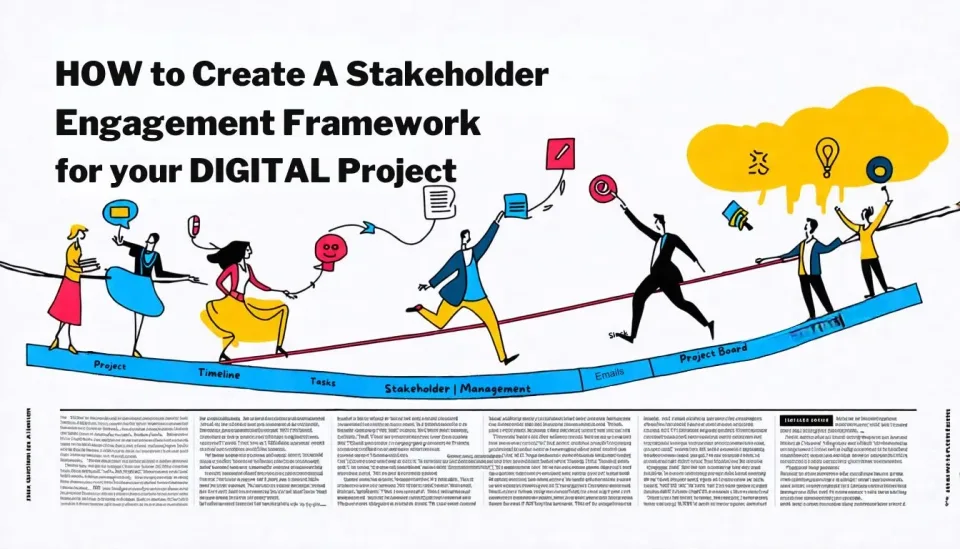
content-strategy
A stakeholder engagement framework for your digital project, in one worked example
One realistic digital-project decision traced through the whole framework: the map, the engagement levels, the communications plan and the measurement, showing exactly what each conversation changed.
Read note →
content-strategy
A transformation communication plan you can fill in
A communication plan template for transformation programmes: 4 phases crossed with audiences, messages and feedback routes, worked through a CRM replacement example. The phases where input can still change the plan, and the honest version of the failure statistics.
Read note →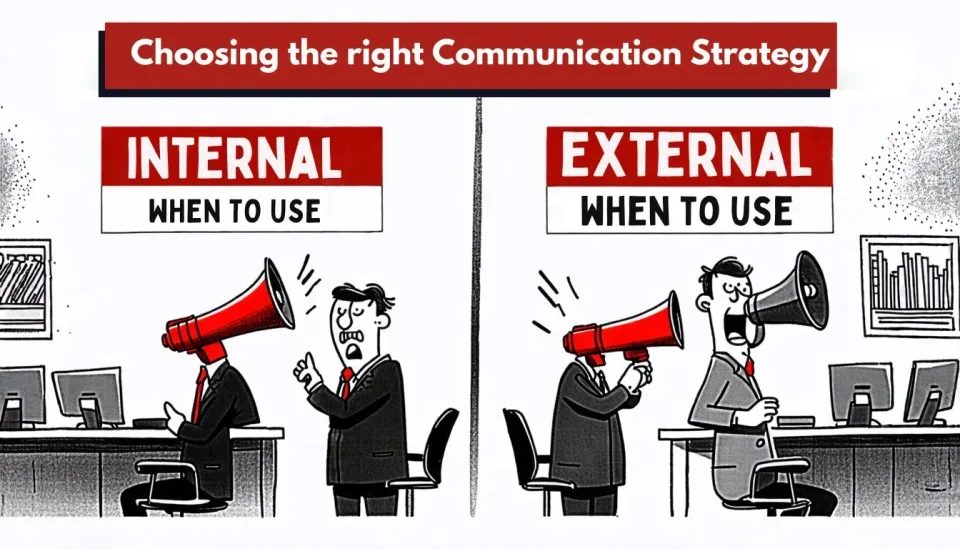
content-strategy
Internal versus external communication, and how to translate between them
Most significant messages go to both audiences. What decides success is the translation between the two versions and the order they arrive. The comparison, the sequencing rules, and a same-message worksheet covering what, channel, timing and replies.
Read note →
brand-messaging
What brand messaging is, and the 4 layers that hold it
Brand messaging is the set of things you have decided to claim. The architecture that holds it has 4 layers, positioning, claims, proof and naming, each with inputs, a decision it commits you to, and a review question.
Read note →
brand-messaging
Measuring the effectiveness of your brand messaging
Messaging works down a ladder: exposure, comprehension, belief, action, commercial outcome. Each rung can be measured with tools a small business already has, and the neglected middle rungs are the cheap ones.
Read note →
brand-messaging
How to align brand messaging with your audience
Demographics tell you who buys. Your customers' own words tell you what to say. Where to find that language in support tickets, sales calls and search, and a worksheet for turning verbatim quotes into messaging.
Read note →
brand-messaging
Keeping brand messaging consistent across channels
Inconsistency is usually a governance failure, not disobedience: people rewrite claims because they cannot find the current ones. A source of truth, named owners, explicit approval triggers and a logged exceptions list fix it.
Read note →
brand-messaging
Brand messaging versus brand voice, and how to tell them apart
Messaging is what you say. Voice is how you sound saying it. A voice is a set of rules someone could break, not a list of adjectives, and 6 UK organisations show what that looks like in practice.
Read note →
brand-messaging
Brilliant brand messaging: 7 examples, scored
Fame is not the test. 7 brand claims that pass the swap test, the cost test, comprehension and proof, each linked to the organisation's own page, from Monzo's mission to Patagonia's ownership line.
Read note →
internal-communications
Internal communications and employee engagement: what comms can and cannot do
Internal communication does not create engagement on its own. It owns clarity, inclusion and voice, and it fails engagement by being late, spun or broadcast. The cluster routes, the trust argument, and a minimum measurement plan with 5 numbers adapted for internal audiences.
Read note →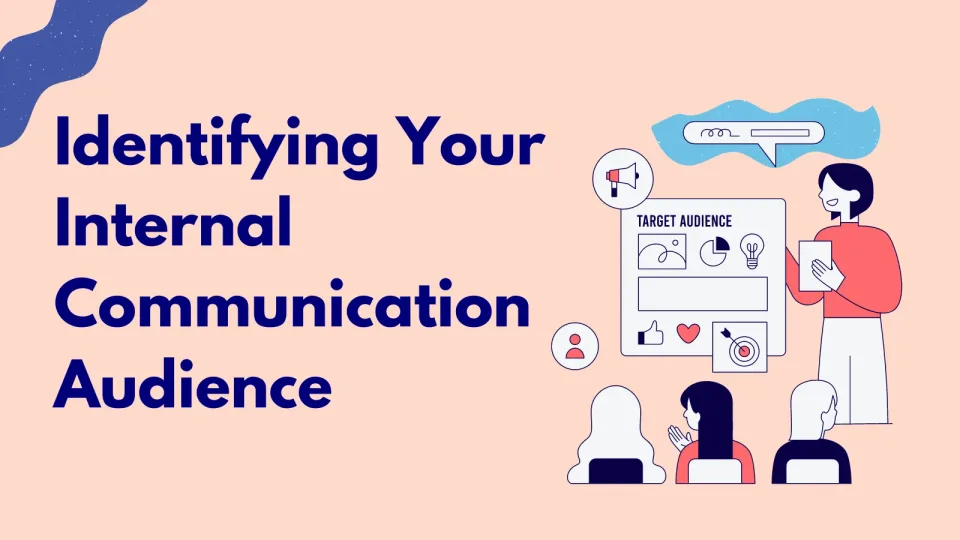
internal-communications
How to map your internal communication audiences
Your internal audiences are several audiences, not one. Segment by what each group must do rather than who they are, then capture it in a one-page map: group, needs, when, channel and where replies go.
Read note →
content-strategy
Survivorship bias in marketing, and how to spot it
Marketing runs on case studies, and a case study is a sample of one that has already been filtered by its outcome. What survivorship bias is, how the famous bomber story is told wrong, and a table for finding who is missing from your evidence.
Read note →
content-strategy
What a stakeholder engagement framework is
A stakeholder engagement framework is 4 artefacts maintained as one practice: the map, the engagement strategy, the communications plan and the measurement plan. What each contains, the IAP2 levels that set depth, and the smallest version a small team can keep.
Read note →
content-strategy
Stakeholder engagement versus stakeholder management, and how to tell them apart
Management is the what and who: registers, analysis and plans. Engagement is the how: consultation, communication, negotiation, compromise and relationship building. APM's definition folds the first into the second, and PMI has moved the same way.
Read note →
content-strategy
Stakeholder engagement roles, and who holds each one
Five working roles make stakeholder engagement function: sponsor, delivery lead, subject expert, affected user and decision-maker. A responsibility matrix showing what each role owns, what it needs, and what breaks when nobody holds it.
Read note →
content-strategy
Stakeholder engagement versus a communication plan, and how to tell them apart
A communication plan carries information to stakeholders. Engagement exists when what they say back can change a decision. A composite scenario shows the failure mode: consultation that starts after the decision that mattered.
Read note →
content-strategy
Internal versus external stakeholders, and how to tell them apart
The definition that matters is decision rights: who you can direct, and who you can only influence. A classification matrix covering what each stakeholder can decide or stop, what they hold at stake, and the approach each one needs.
Read note →
content-strategy
Difficult stakeholders, and what each one needs
Difficult stakeholder behaviour is information, and the response depends on the diagnosis: opposed, disengaged, overloaded or scarred. The decision tree, the response that fits each mode, and the moves that make all 4 worse.
Read note →
content-strategy
Web content roles, and which one your problem needs
Content roles are a checklist of responsibilities someone must own, whether or not they are job titles. The decision tree from symptom to role, each role compressed to what it owns and the signs it is missing, and how small teams combine roles without dropping work.
Read note →
content-strategy
What marketing operations management is for
Marketing operations is the machinery behind marketing: process, people, technology and data. A decision tree for telling ops problems from strategy problems, what the function owns, and how it is set up.
Read note →
content-strategy
Culture change in a digital transformation, and where it stalls
Digital transformations stall on decision rights, incentives and handovers rather than on the technology. How to assess the culture you have, which interventions hold, and which signals show the change is real.
Read note →
branding
How to understand your audience and make sure your message resonates
Audience research works when it starts from a decision. The questions worth answering, the method that answers each one, and the evidence record that keeps the answers checkable.
Read note →
content-strategy
Data-driven content strategy, and what data cannot decide
Most small businesses do not have enough traffic to test the things they are testing. What a data-driven content strategy can settle, the sample sizes it would take, and the decisions that stay editorial.
Read note →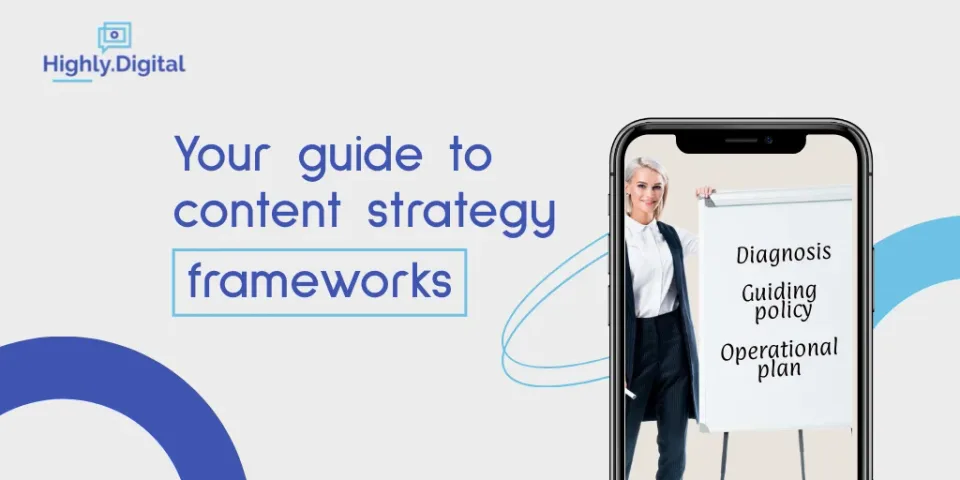
content-strategy
Your guide to content strategy frameworks
A content strategy framework is the structure you use to write a strategy: diagnose the problem, decide the approach, then decide what to do. This is the framework I use, with the questions to answer at each stage.
Read note →
content-strategy
How to set KPIs and marketing objectives
An objective states the change you want, a KPI measures it, and a threshold turns the measure into a decision. How to build that chain, one measure at a time.
Read note →