Lessons from content design
Content Design
What working in UK public-sector content design taught me, and what of it is actually worth bringing into commercial content strategy.
Content Design
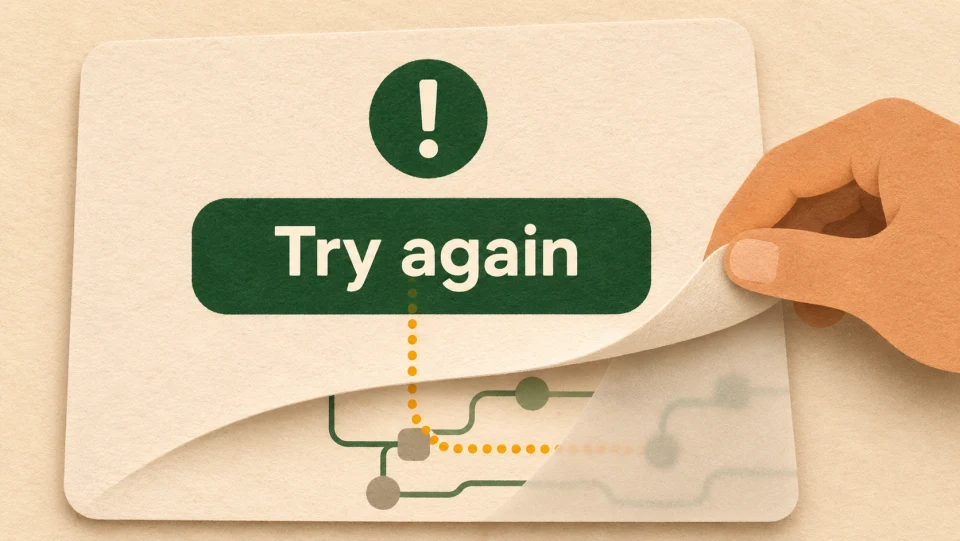
Your error message could be making promises your product can’t keep
Before approving an error message, check the facts behind its next step. If receipt, saved answers or safe resubmission are unclear, take the promise to the service owner.
Read annotation →
Content Design
Resolving a conflict between brand voice and service clarity
Work through a disagreement about service wording: establish the meaning, examine alternatives and make any exception within the organisation's existing authority.
Read annotation →
Content Design
The eight-second claim cannot decide what to cut
An attention statistic cannot tell you which information a reader can safely lose. Examine the source, the proposed deletion and the task the page must support.
Read annotation →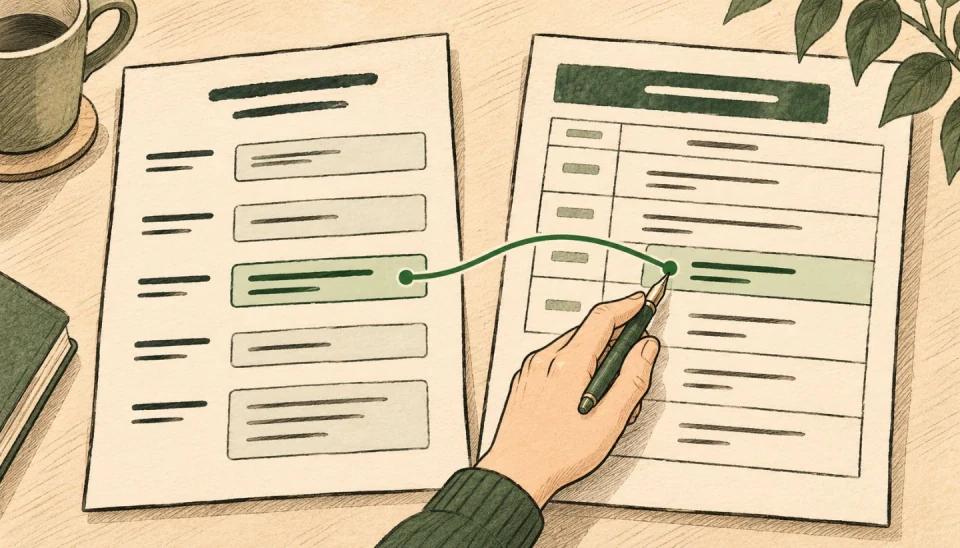
Content Design
Decide which questions your form needs
Decide how each form answer will be used, who needs to provide it and when. A practical review of necessary, optional and compulsory questions.
Read annotation →
Content Design
The intranet page was published. The responses did not arrive
An action-led internal communication is one staff service. Trace intended staff, discovery, understanding, action and receipt before changing the page.
Read annotation →
Content Design
What content design is, and why marketers should care
Content design starts from a user need and picks the best way to meet it, which may not be words at all. What it is, how it differs from copywriting and UX writing, and the part of the job most marketing skips.
Read annotation →
Content Design
Plain English is a conversion tactic, not a compliance checkbox
Plain English in business writing gets treated as an accessibility duty. I think it is one of the cheapest conversion tactics available. The argument, the evidence behind it, and the 6 edits that do the work.
Read annotation →
Content Design
The content lifecycle nobody plans for
Most business content is published and never reviewed again. A content audit you can run in an hour a quarter, and a way to decide what to keep, update, combine or remove.
Read annotation →
Content Design
What government content design taught me about writing for people who do not want to be there
Government content design starts from the assumption that the reader is tired, rushed and would rather be somewhere else. The worst-day test, and what rebuilding a public-sector recruitment site around applicants taught me about applying it to commercial content.
Read annotation →
Content Design
User needs versus what users ask for
A request names a solution. A need names a job the reader is trying to finish. How to tell them apart, a table that translates 5 common requests into the need underneath, and the one question I ask before writing anything.
Read annotation →